Heat
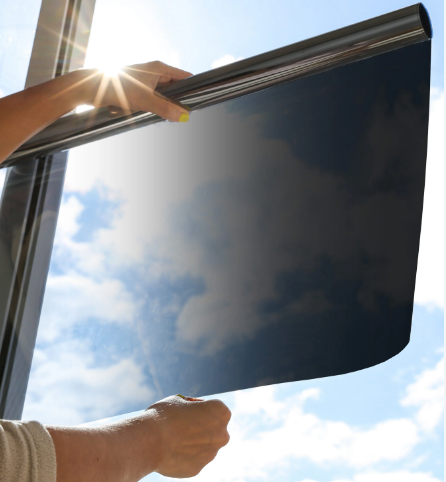
A metallised or UV-coated layer reflects part of the solar energy before it crosses the glass, which reduces the load on the chillers behind it.
Solar control · heat rejection
Reflective and one-way constructions, supplied by the roll or slit to your width. The measured figures for the batch you receive travel with the order — not a catalogue average.
What the film does
Solar film is specified against the glass and the orientation, not against a colour card. These are the three effects buyers actually ask about.
A metallised or UV-coated layer reflects part of the solar energy before it crosses the glass, which reduces the load on the chillers behind it.
Visible light is trimmed so screens stay readable through the afternoon. How far it needs trimming depends on the room — that is the only number worth arguing about.
Ultraviolet is what fades flooring, fabrics and retail stock. UV rejection is measured on the construction you order — ask for the figure rather than the marketing number.
Reflective · one-way mirror
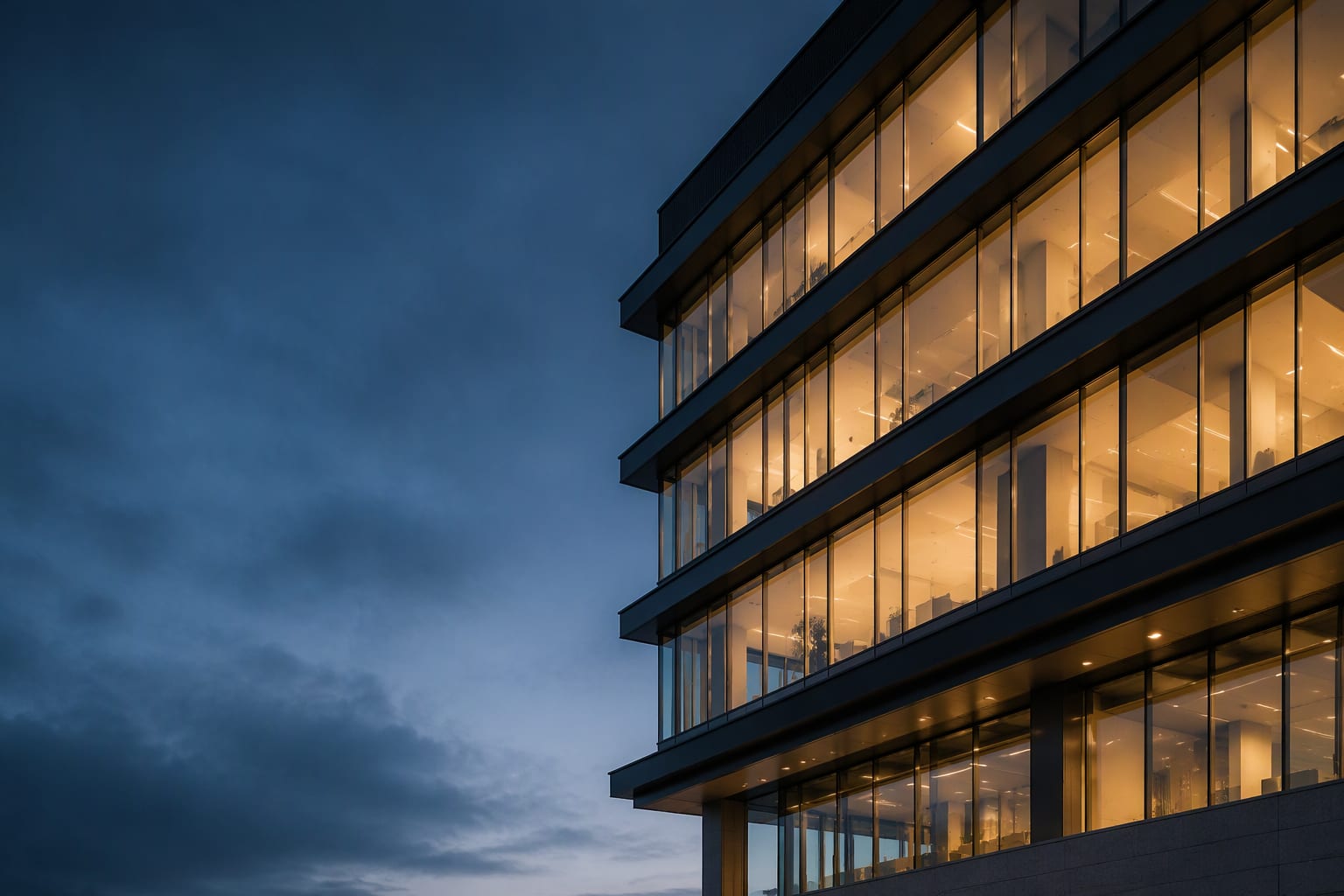
In daylight the outside reads as a mirror and the interior keeps its view. At night, with the lights on inside, the effect reverses — the room becomes visible from the street.
That is physics, not a defect, and it is the single most common complaint when it is left out of the quotation. We put it in writing, and we ask what the lighting schedule looks like before recommending it for a shopfront or a lobby.
Clear electrostatic
Heritage facades, retail frontage with a design review, rented space where the film has to come off again: a clear static-adhesive film gives UV and heat control without a tint or a mirror.
No adhesive means no residue, and the same pane can be filmed, stripped and re-filmed without a scraper. The trade-off is that a clear film does less work than a reflective one at the same thickness — buy it for appearance, not for the numbers.
Before you specify
Most film websites publish a TSER figure for everything. We publish the figure we can measure on the batch you receive, which is a narrower promise — and a more useful one.
The catalogue does not publish TSER for these SKUs. If your project needs SHGC for an energy model, say so before ordering and we will send the measured data for the exact roll rather than an average.
The building range here is metallised PET. Nano-ceramic exists in the car line; for a facade that needs a neutral, non-reflective look, ask before specifying rather than assuming the two are interchangeable.
Dark or reflective film on annealed glass raises the temperature difference across the pane. For large panes, tinted glass or sealed units, ask for a stress check before the film goes on.
Privacy film works while the outside is brighter than the inside. At night, with lights on, it stops being private. We will not sell it as a security measure.
Series
Prices are the published range at the time of writing and move with quantity and colour. Ask for a quotation against your quantity.
| Series | Thickness | Appearance | MOQ | Indicative price |
|---|---|---|---|---|
| One Way Mirror Reflective Window Film Building Privacy Glass | On request | On request | 1 roll | $37.6–40 |
| PET Silver UV Rejection Heat Insulation Building House Window | On request | On request | 1 roll | $37.6–40 |
| Exterior Window Film Self-adhesive Sun Protection High UV 100% | On request | On request | 1 roll | $172.8–176 |
| ARTISAN Light Grey PET 2.5mil Window Tint Film Privacy | On request | On request | 1 roll | $136–144 |
| Exterior Window Film Solar Control UV 100% PET Self-adhesive | On request | On request | 1 roll | $172.8–176 |
| Exterior Window Film Energy Saving Home Hotel Office Building | On request | On request | 1 roll | $172.8–176 |
| Light Blue PET One Way Vision Heat Insulation Sun | On request | On request | 1 roll | $136–144 |
| UV 100% Blocking Sun Protection High Heat Insulation Exterior | On request | On request | 1 roll | $160–176 |
| Commercial Office Building Glass Facade Energy-Saving Exterior Solar Control | On request | On request | 1 roll | $168–176 |
| Nano Ceramic 2Mil PET Self Healing Anti Scratch Window | On request | On request | 1 roll | $120–124 |
| Silver PET One-Way Mirrored Window Film Solar Reflective Transparent | On request | On request | 1 roll | $38.4–44 |
| Metallic Reflective Window Tint Film PET 35% VLT Sun | On request | On request | 2 rolls | $38.4–44 |
| One Way Mirror Window Film Self-Adhesive PET High Heat | On request | On request | 1 roll | $37.6–40 |
| One Way Vision Gold Silver Solar Tinted Window Film | On request | On request | 1 roll | $33.6–38.4 |
| Quality Modern Design PET Reflective One Way Window Film | On request | On request | 1 roll | $37.6–40 |
| 2 Mil PET Self-adhesive Mirror One-Way Vision High Privacy | On request | On request | 1 roll | $37.6–40 |
| Silver Mirror Reflective PET Self-adhesive Modern Building Window Film | On request | On request | 1 roll | $37.6–40 |
| UV Protection Modern PET One Way Vision Mirror Window | On request | On request | 1 roll | $37.6–40 |
| One Way PET Window Film Privacy Reflective Mirror Tinting | On request | On request | 1 roll | $37.6–40 |
| 1.52 * 30m Modern One-way Vision Architectural Window Film | On request | On request | 1 roll | $37.6–40 |
| One Way PET Window Film Privacy Reflective Mirror Tinting | On request | On request | 1 roll | $37.6–40 |
Mechanism
Most of the argument about solar film disappears once the spectrum is separated. Heat, light and damage are not the same stream, and no single film handles all three equally.
Roughly half of the energy arriving at a window is near-infrared, a little under half is visible light, and a few percent is ultraviolet. A typical architectural film does three things at once: it reflects part of the infrared, absorbs another part and re-radiates it, and transmits what is left. The visible share it lets through is what you can see and what the tenant will judge you on; the total it keeps out is what the chiller notices.
That is why a film can be excellent at one number and mediocre at another without anyone lying. A heavily metallised film reflects broadly and scores well on total rejection, at the cost of a mirror look and a real thermal load on the glass itself. A dyed film absorbs instead of reflecting, which keeps the reflection down and puts the heat into the pane. A spectrally selective construction tries to reject infrared while transmitting visible light, and costs more because the layer stack is harder to make.
| Construction | How it works | What it costs you |
|---|---|---|
| Reflective metallised | A metal layer reflects infrared and visible light back out | Mirror appearance, and the highest risk of thermal stress on the pane |
| Absorptive dyed | Dye absorbs energy and the glass re-radiates it | Lower reflectivity, but the pane runs hotter and the colour fades sooner |
| Spectrally selective | A multi-layer stack rejects infrared while transmitting visible light | Higher cost per square metre, and fewer suppliers can coat it consistently |
None of these is "best". The right choice depends on what the glass can take, what the elevation looks like and what the tenant will accept — in that order.
Risk
When a pane cracks after filming, the film is what everyone remembers. Usually the film is the trigger, not the cause — the glass was already close to its limit.
Glass fails from a temperature difference, not from absolute heat. A filmed pane absorbs more solar energy than bare glass, so the centre runs hotter than the edge held in the frame. On clear annealed glass of ordinary size, the margin is wide enough that nothing happens. On tinted glass, on large panes, on glass with a ceramic frit or a deep recess, or on a sealed unit where heat cannot escape inward, that margin narrows quickly.
The check is not complicated, but it needs information most buyers do not have at hand: the glass type and thickness, the pane dimensions, the frame and fixing, the shading, and the film's absorptance. A supplier who quotes without asking for those is quoting a film, not a specification. We will ask, and where the answer is marginal we will say so in writing before the order rather than after the crack.
There is a cheap way to reduce the risk: choose a lighter film, or a construction that reflects rather than absorbs, and accept slightly less heat rejection. On a facade where every pane is expensive and the replacement lead time is measured in months, that trade is usually correct.
| Glass condition | Why it matters | What we do |
|---|---|---|
| Tinted or body-coloured glass | Already absorbs solar energy before film is added | Ask for the glass specification; recommend a lighter grade |
| Large panes, over roughly 2 m² | The centre-to-edge gradient scales with dimension | Stress check against the film absorptance before quoting |
| Sealed units, especially low-E | Heat cannot dissipate inward, and the coating changes the balance | Confirm the cavity and coating; exterior grade if the inner face is inaccessible |
| Ceramic frit or deep reveal | Local hot spots at the frit edge | Avoid the darkest grades regardless of the cooling target |
Yes — A4 and 30 cm swatches, and a 1 m length of the safety film. Sample cost is charged and credited against the first order.
The film itself does not, but heat build-up can. On annealed or tinted glass, or on large sealed units, ask for a thermal stress check first. The clear electrostatic film is the low-risk option because it comes off without solvent.
A mirror film reflects; ceramic absorbs and re-radiates without a metal layer. We supply the former. If your client needs a neutral, non-metallised look, we will tell you we are not the right supplier rather than sell you a substitute.
Tell us the glass build-up, the elevation and the quantity. You get the film grade, the measured data for that roll and the MOQ in one reply.